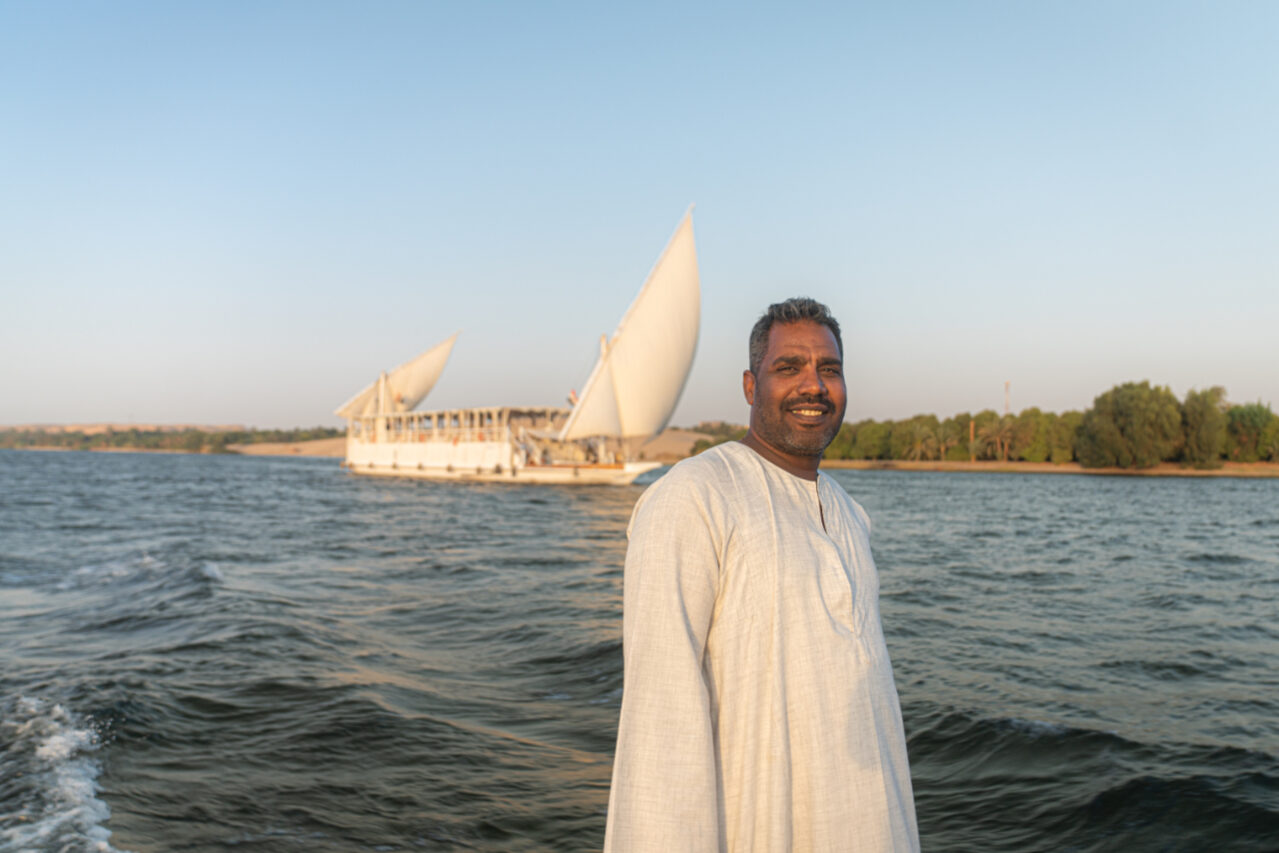
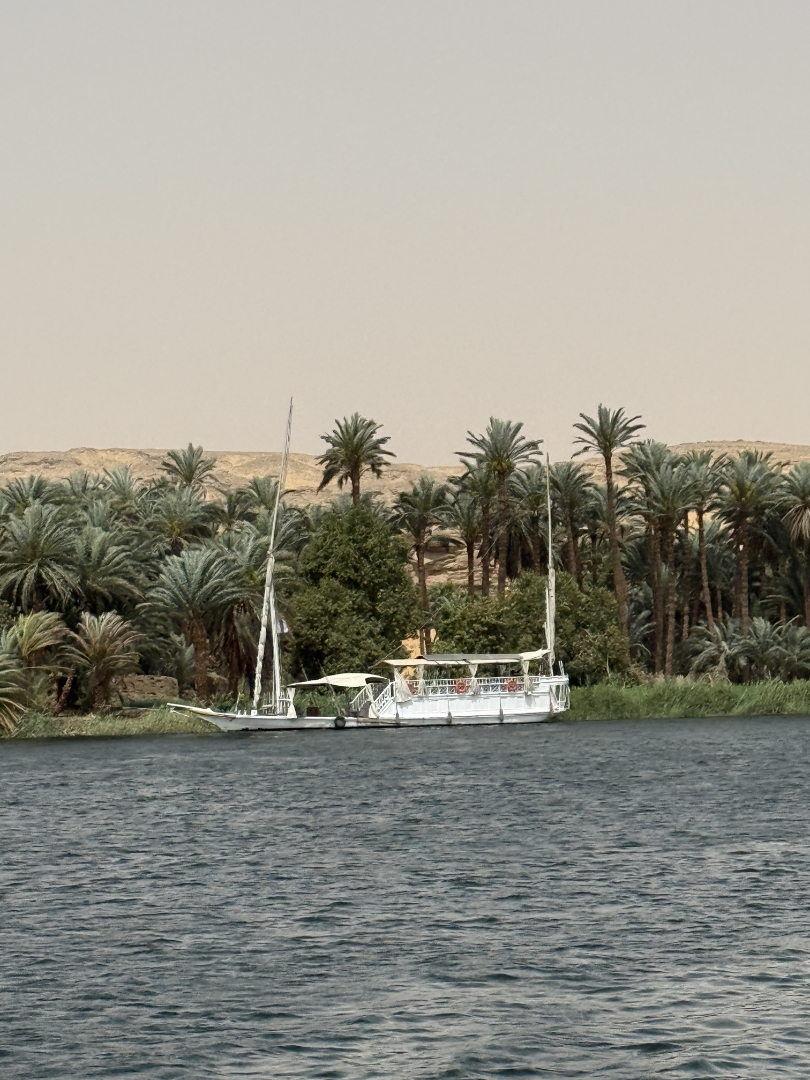
The Nile has been a living artery for thousands of years. Its waters have carried pharaohs, traders, pilgrims, and dreamers, and long before the age of diesel engines and air-conditioned cruise ships, it carried the dahabiya: a graceful, sail-powered wooden vessel that moved with the river rather than against it.
When we chose the dahabiya as the heart of our company, sustainability wasn’t a marketing afterthought – It was a driving factor.
Why the dahabiya is different
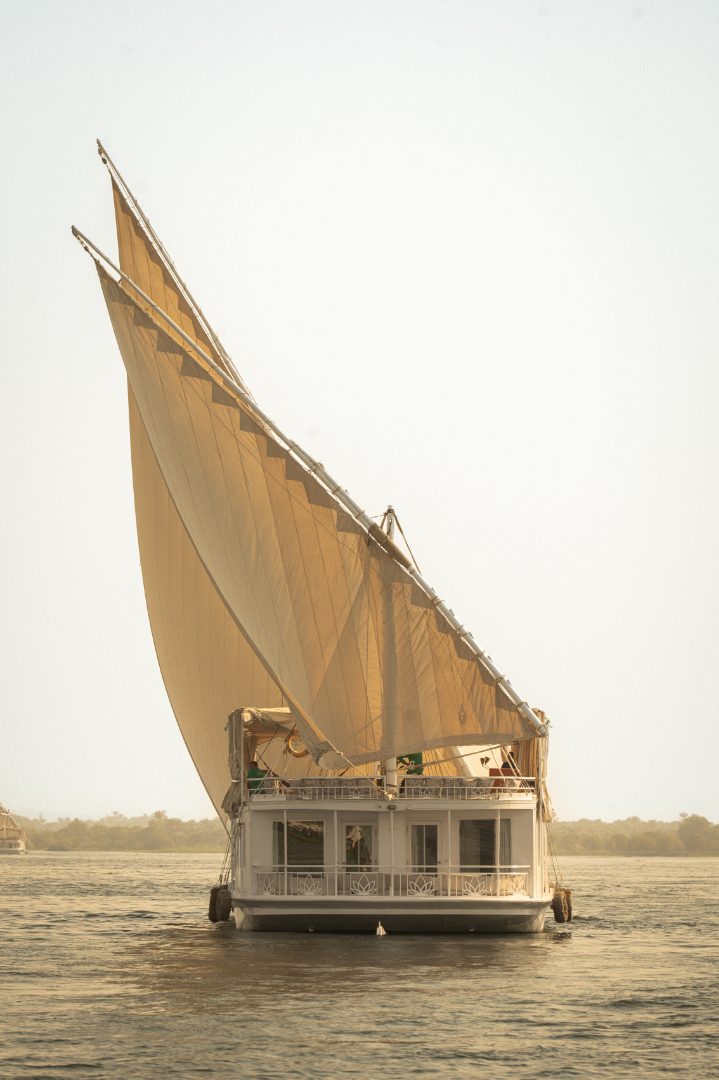
A dahabiya is fundamentally a slower, smaller, and more deliberate way to travel. While large Nile cruise ships carry hundreds of passengers and burn significant amounts of fuel to keep engines, kitchens, and entertainment systems running around the clock, a dahabiya carries a small group of guests and, when the wind cooperates, sails in near silence.
That silence is not just romantic. It means less engine use, less fuel consumption, and less noise and water disturbance for the communities and wildlife along the riverbank. The dahabiya doesn’t just pass through the landscape; it inhabits it gently.
The solar revolution on board the MINYA
Choosing a traditional vessel is only the beginning. At Sail the Nile, we’ve always believed that a commitment to sustainability has to be active, not passive, and that means continuously investing in cleaner solutions, even when the old ones technically still work.
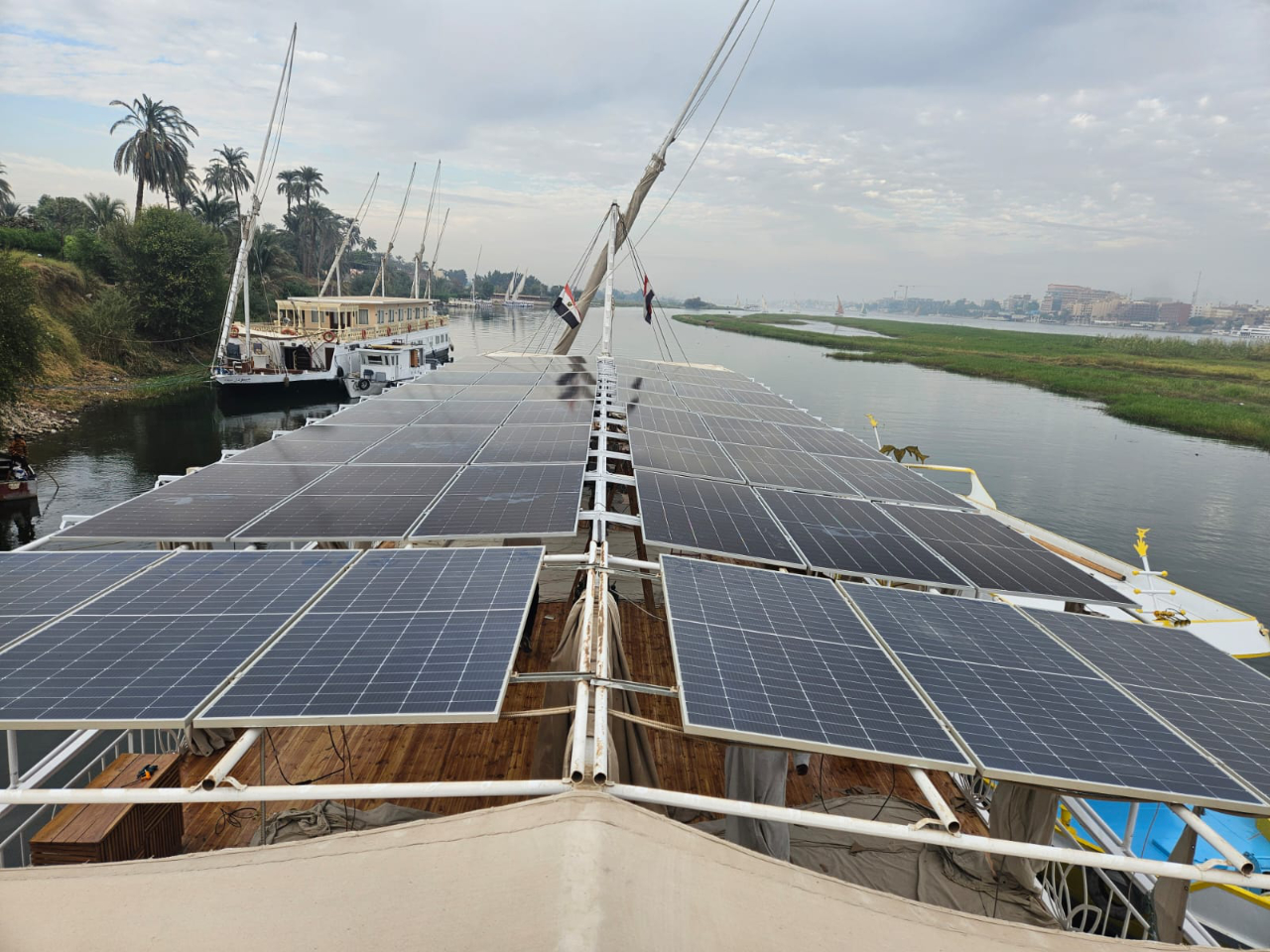
We’re proud to share that our dahabiya MINYA has recently undergone a significant solar upgrade. Thanks to a greatly expanded solar panel installation, the MINYA now generates enough clean energy to power the air conditioning entirely from solar — no generator needed during the day. We run the generator only from 5 to 7 in the morning and from 5 to 10 in the evening, covering the hours when solar production is naturally low. For the rest of the day, the sun does the work.
This is a meaningful shift. Air conditioning has traditionally been one of the biggest energy demands on a vessel like ours, and being able to meet that demand with rooftop solar rather than a diesel generator significantly reduces our fuel consumption and emissions. Guests can stay comfortable in the Egyptian heat knowing that their comfort is coming from the sky above, not a tank below deck.
What’s next: setting our sights on the Abundance
Progress, for us, means never being satisfied with “good enough.” After the success of the solar upgrade on the MINYA, we’re turning our attention to our other vessel, the ABUNDANCE. Our goal is ambitious but simple: to operate the ABUNDANCE without the generator at all.
It’s a goal we’re working toward carefully and honestly. We’ll test, adjust, and report back. But the direction is clear. Every reduction in generator hours is a reduction in diesel burned, in emissions released, and in noise that disturbs the quiet of the river at dawn.
Why it matters — beyond the boat
The Nile is not just a backdrop for beautiful photographs. It is the source of life for millions of people, a fragile and extraordinary ecosystem, and one of the most historically significant waterways on earth. How we travel on it carries real consequences.
Tourism can extract or it can contribute. It can pass through and leave damage, or it can pass through and leave things better than it found them. We believe that a genuine love of this river — which is what brought us here, and what keeps us here — demands that we take that responsibility seriously.
When you sail with us, you’re not just choosing a quieter, more personal way to see Egypt. You’re choosing an approach to travel that tries, actively and imperfectly, to do less harm and cause more good.
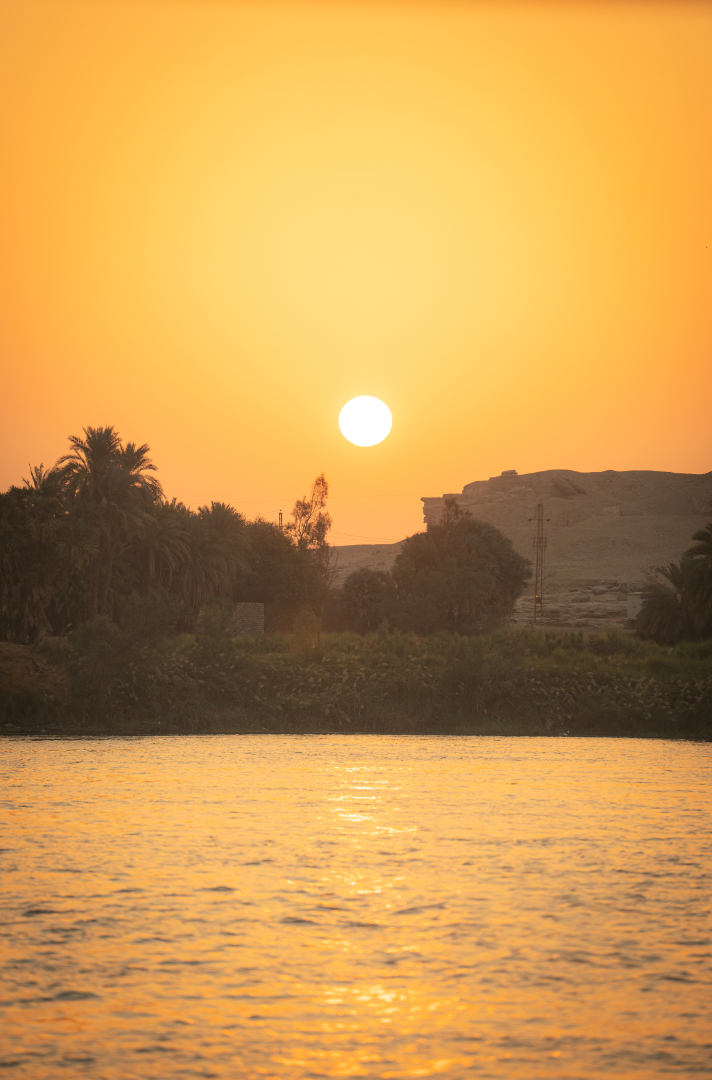
The sun is generous on the Nile. We’re learning, one panel at a time, to let it carry more of the load.