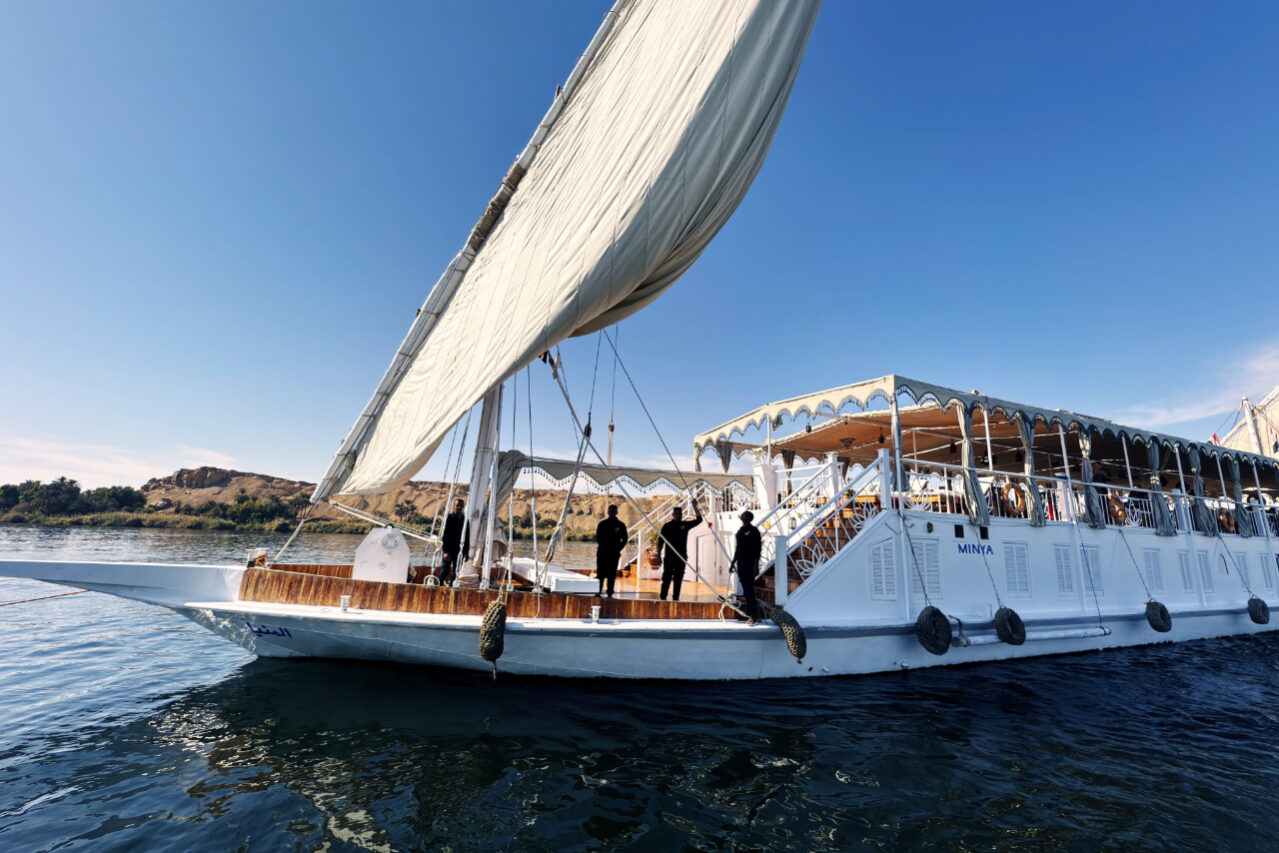
A Nile cruise is one of the most iconic ways to experience Egypt, but not all Nile cruises are the same. For travelers planning their journey, the choice often comes down to two very different styles: the commercial large cruise ship or the smaller, sail-powered dahabiya.
Both offer access to ancient temples and the beauty of the river, but the experience on board — and how you connect with Egypt — can feel worlds apart. Understanding the differences can help you choose the kind of journey that truly suits you.

Size & Atmosphere: Intimate vs. Floating Hotel
Traditional Nile cruise ships are large, often carrying between 100 and 300 passengers. They feel much like floating hotels, complete with multiple decks, entertainment programs, and structured schedules. There’s energy, activity, and a constant sense of movement.
A dahabiya, by contrast, hosts only a small number of guests, usually between 8 and 20, depending on the boat. The atmosphere is intimate and unhurried. There are no crowds on deck, no queues at meal times, and no competing noise. Conversations happen naturally, silence is welcomed, and the river itself becomes the main focus.
For travelers who value calm and personal space, this difference is often immediately noticeable.
Pace & Daily Rhythm: Fixed Schedules vs. Flowing with the River
On a traditional cruise, days tend to follow a fixed timetable. Excursions are often early and efficient, designed to move large groups through major sites before the heat and crowds build. Sailing typically happens at night, meaning guests may wake up in a new location without ever seeing the journey between.
A dahabiya follows the rhythm of the Nile itself. Sailing happens during the day, guided by the wind rather than a strict engine schedule. Time is built into the experience for watching the riverbanks pass by, for resting, and for simply being present.
Excursions are woven gently into the day, not rushed. If the wind is good, sails are raised. If the afternoon is warm, the boat may pause at a quiet mooring. This flexibility creates a sense of ease that many travelers find deeply restorative.

Sailing Experience: Engines vs. Wind
Most traditional cruise ships rely on engines, producing a constant hum as they travel between ports. While comfortable, the journey itself often fades into the background.
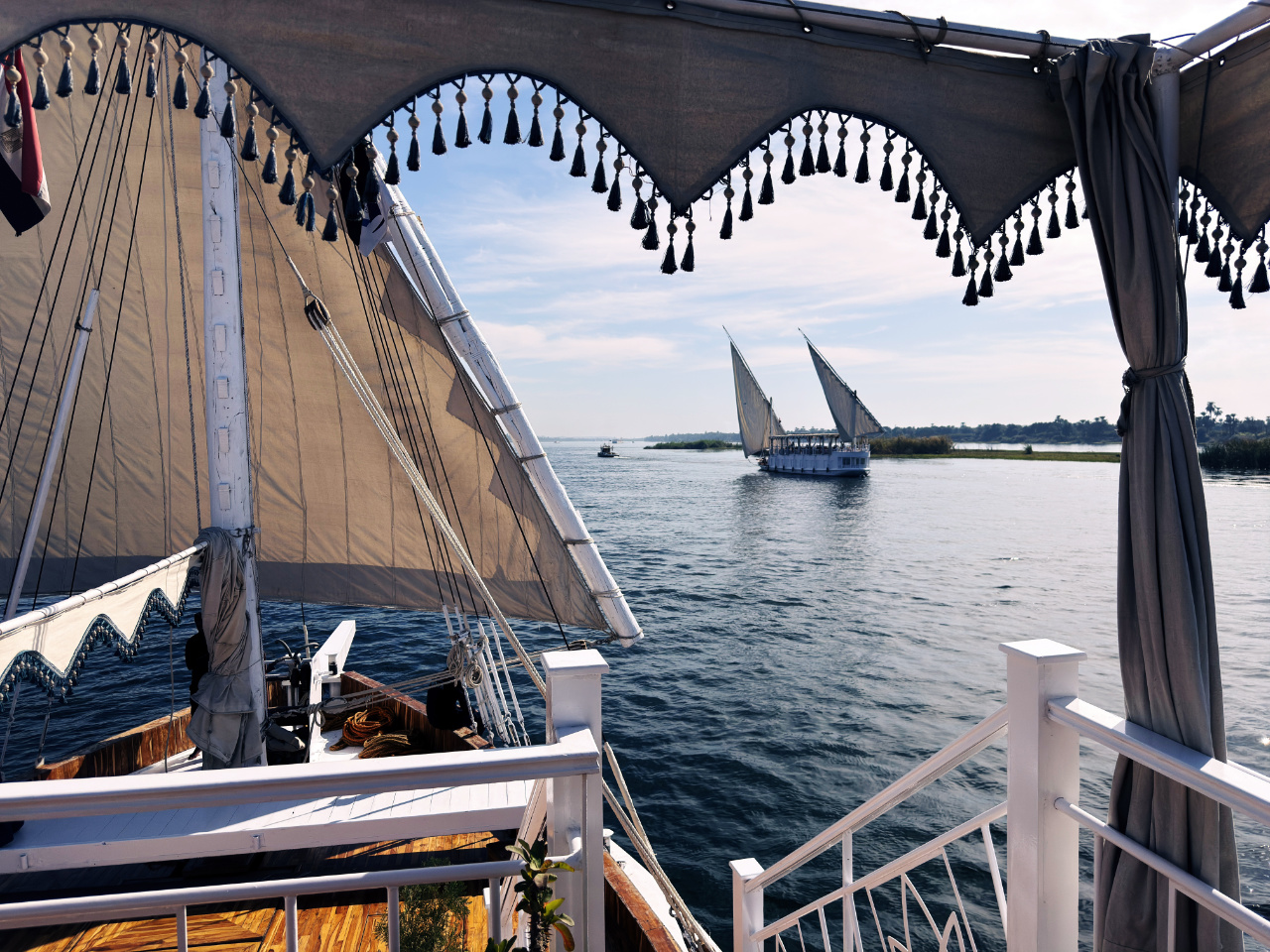
A dahabiya is sail-powered, moving quietly with the wind whenever possible. Without engine noise, guests hear water against the hull, birds along the riverbanks, and the breeze filling the sails. The act of sailing becomes part of the experience rather than just a means of transport.
This slower, quieter way of traveling fosters a deeper connection to the river, one that echoes how people have journeyed along the Nile for centuries.
Access & Moorings: Busy Ports vs. Private Riverbanks
Large cruise ships are limited to major docking points and busy ports. These areas often host several ships at once, which can mean congestion both on the river and at nearby temples.
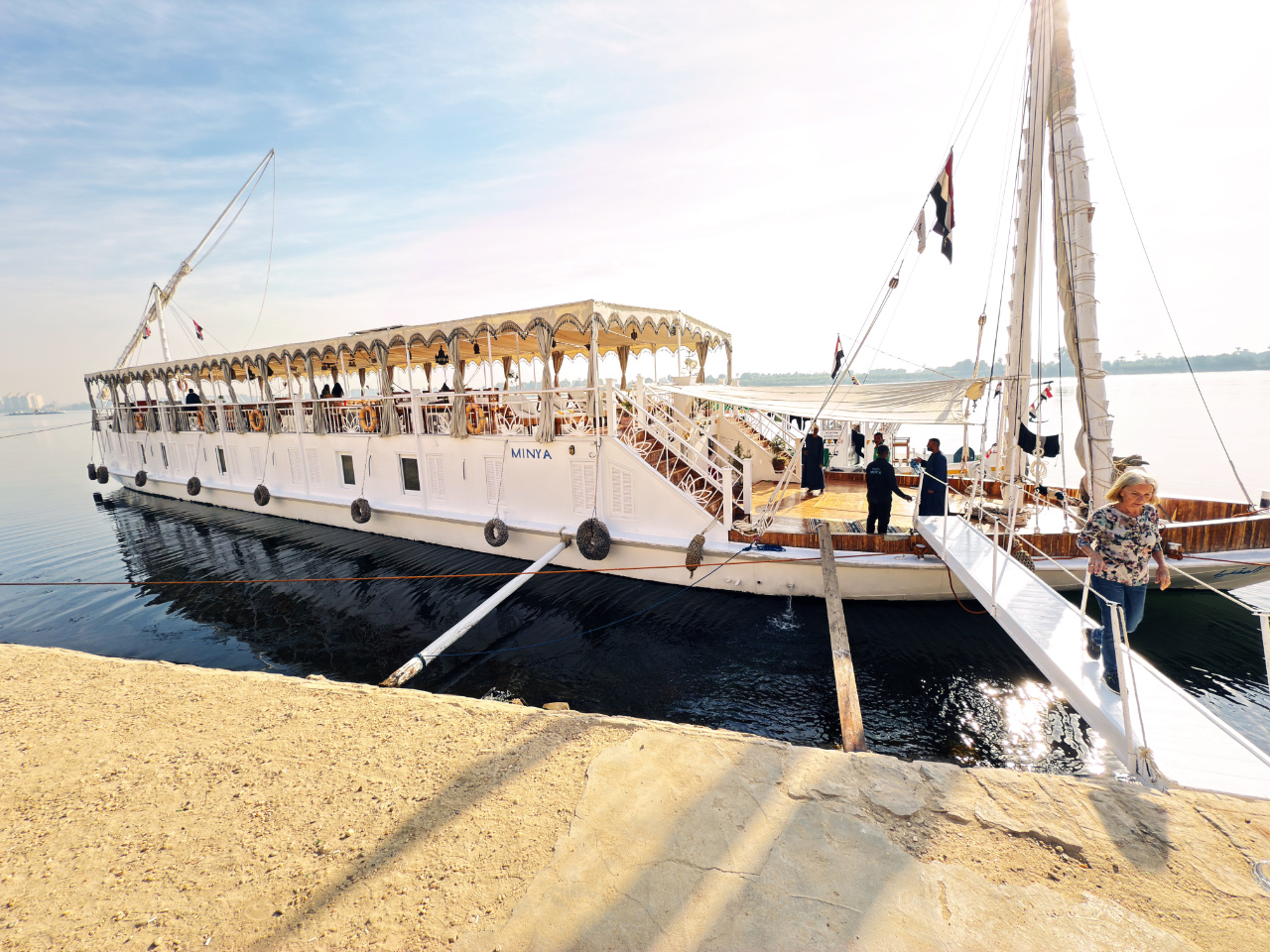
Dahabiyas, with their shallow draft and smaller size, can moor in places larger ships cannot: secluded riverbanks, quiet islands, and peaceful stretches of countryside. Evenings are often spent in complete tranquility, far from other vessels.
This ability to stop where others can’t adds a sense of exclusivity, not in a flashy way, but in a deeply human one.

Excursions & Cultural Connection: Group Touring vs. Quiet Exploration
Traditional cruises focus on Egypt’s most famous sites, often visiting them with large groups from multiple ships at once. The experience is efficient and informative, but sometimes impersonal.
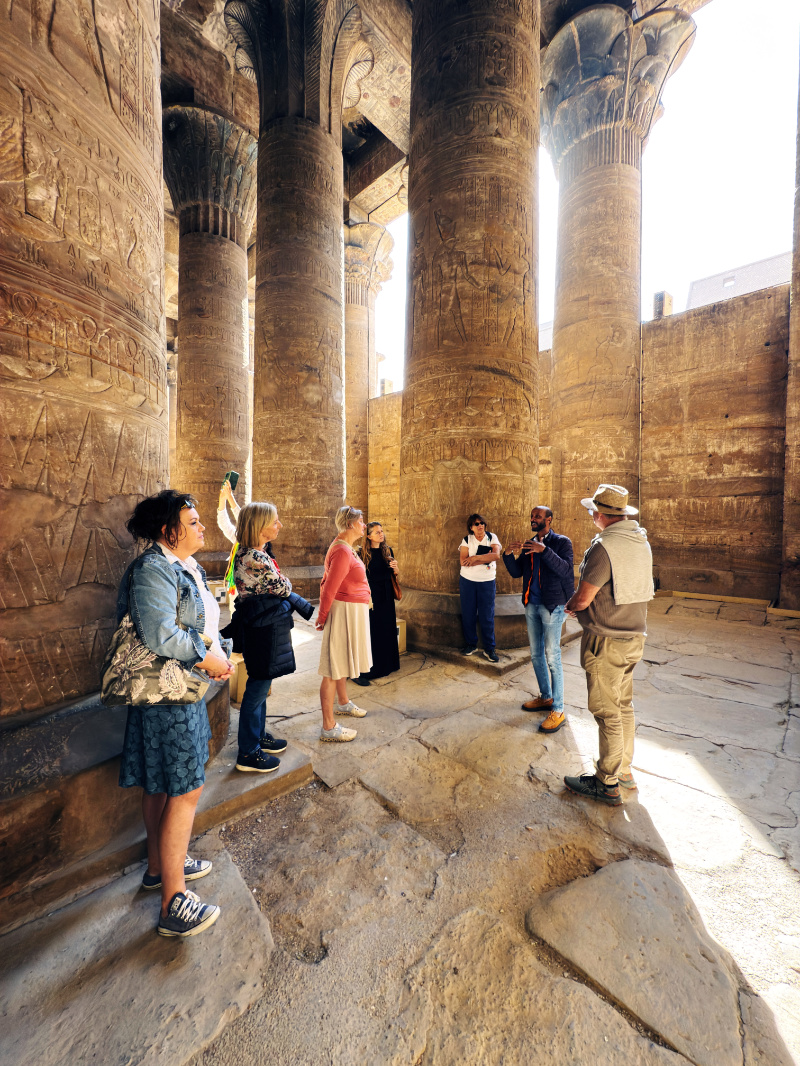
Dahabiya excursions tend to be smaller, quieter, and more flexible. Alongside major temples, guests may visit lesser-known sites, local villages, or places rarely included in standard itineraries. With fewer people, guides can adapt to guests’ interests, answer questions fully, and allow time for reflection.
Many travelers find these moments of cultural connection, simple encounters along the river, just as memorable as the monuments themselves.
Onboard Life & Dining: Entertainment vs. Stillness
Life aboard a traditional cruise ship often includes entertainment programs, buffets, and scheduled activities. For some travelers, this provides familiarity and variety.
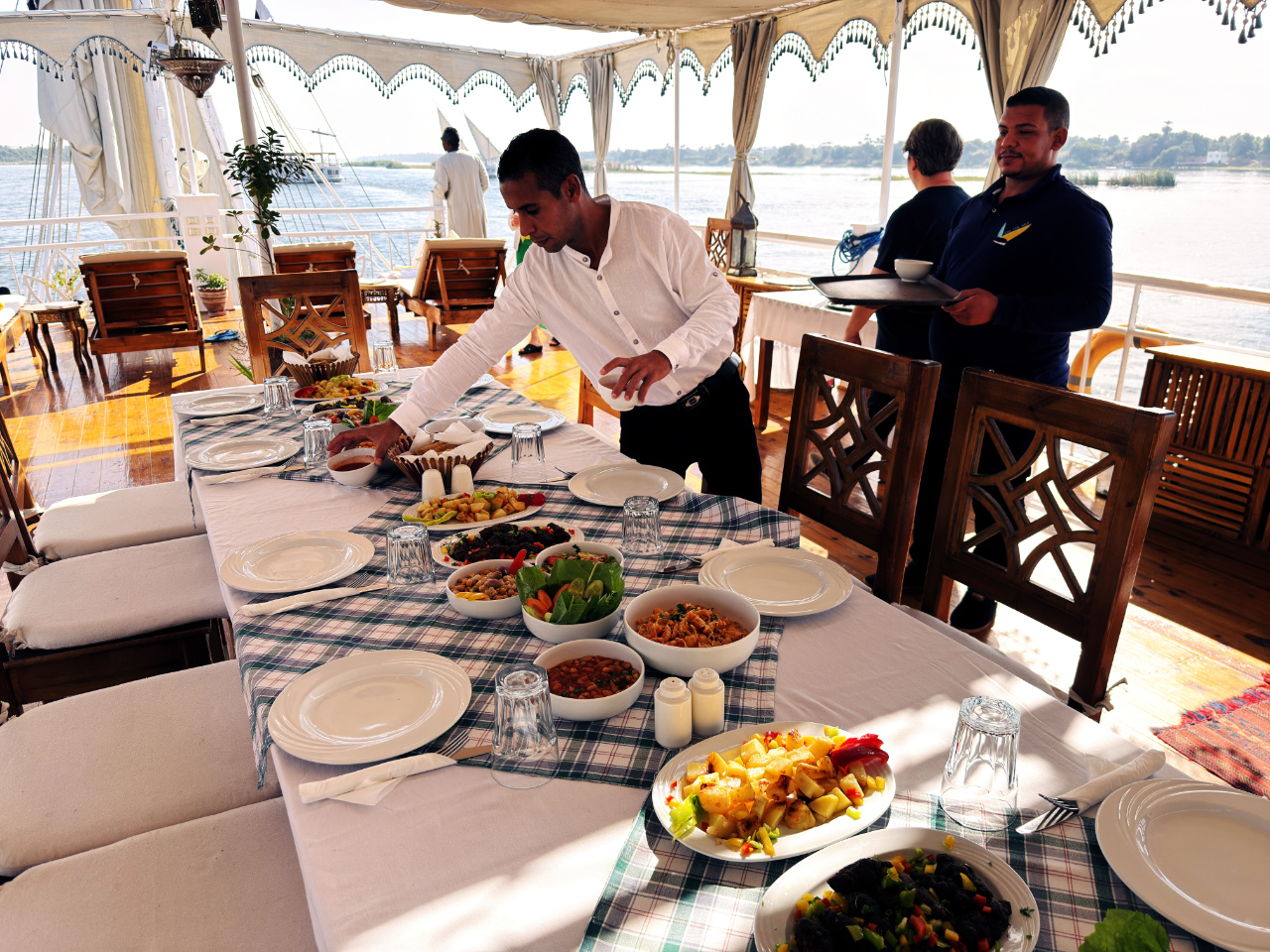
On a dahabiya, onboard life is intentionally simple and refined. Meals are freshly prepared, often enjoyed on deck, and served in a relaxed, communal atmosphere. There are no loud shows or announcements, just conversation, reading, watching the river, or stargazing at night.
The emphasis is on comfort without excess, hospitality without formality.
Sustainability & Impact
Larger cruise ships have a heavier environmental footprint, relying on engines and servicing many passengers at once.
Dahabiyas, using wind power whenever possible and hosting fewer guests, offer a more environmentally gentle way to travel. For travelers mindful of sustainability and low-impact tourism, this can be an important consideration.
Which Is Right for You?
A traditional Nile cruise may suit you if you:
- Enjoy a lively, social atmosphere
- Prefer fixed schedules and clear structure
- Like having many amenities in one place
- Are comfortable navigating crowds
A dahabiya cruise may be perfect if you:
- Value calm, privacy, and atmosphere
- Prefer small groups and personal service
- Enjoy slow travel and quiet moments
- Want to experience the Nile as a place, not just a route
Two Ways to Experience the Same River
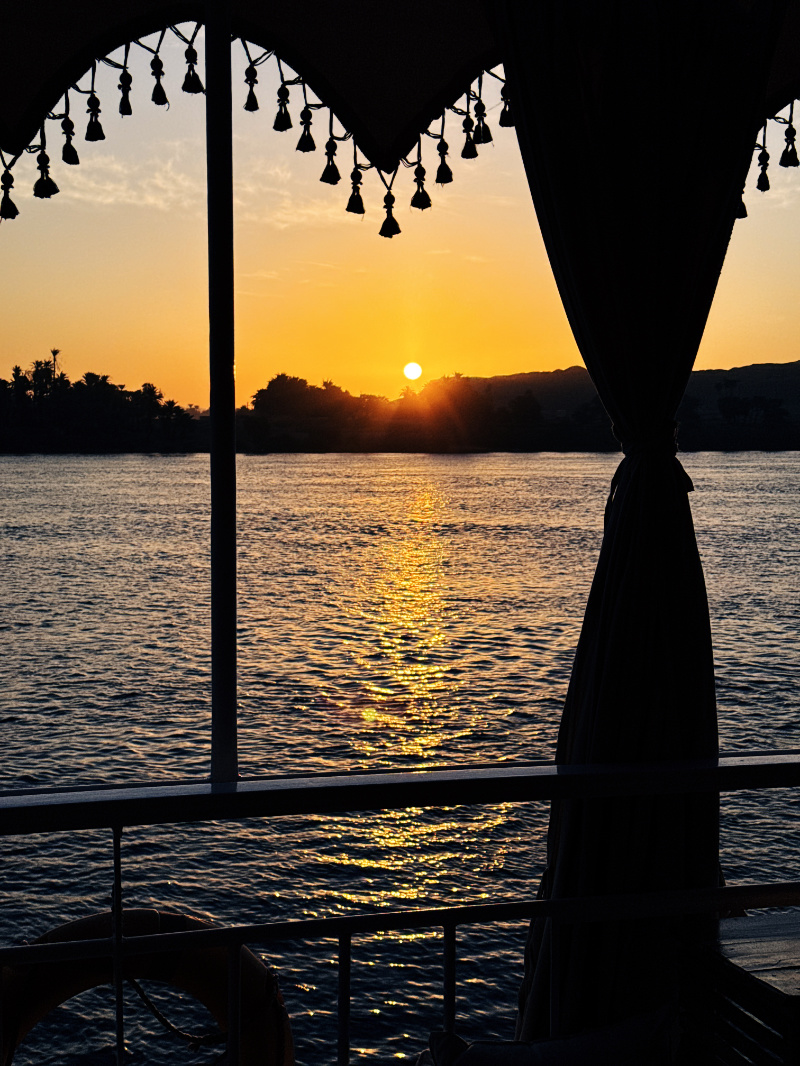
Both traditional Nile cruises and dahabiyas travel the same ancient river, but they tell very different stories.
One is efficient, lively, and grand in scale. The other is gentle, intimate, and deeply connected to the rhythm of the Nile itself.
Neither is inherently “better.” But for travelers seeking space, stillness, and a sense of timelessness, a dahabiya offers something increasingly rare in modern travel: the luxury of slowing down.
And for many travelers, that makes all the difference.