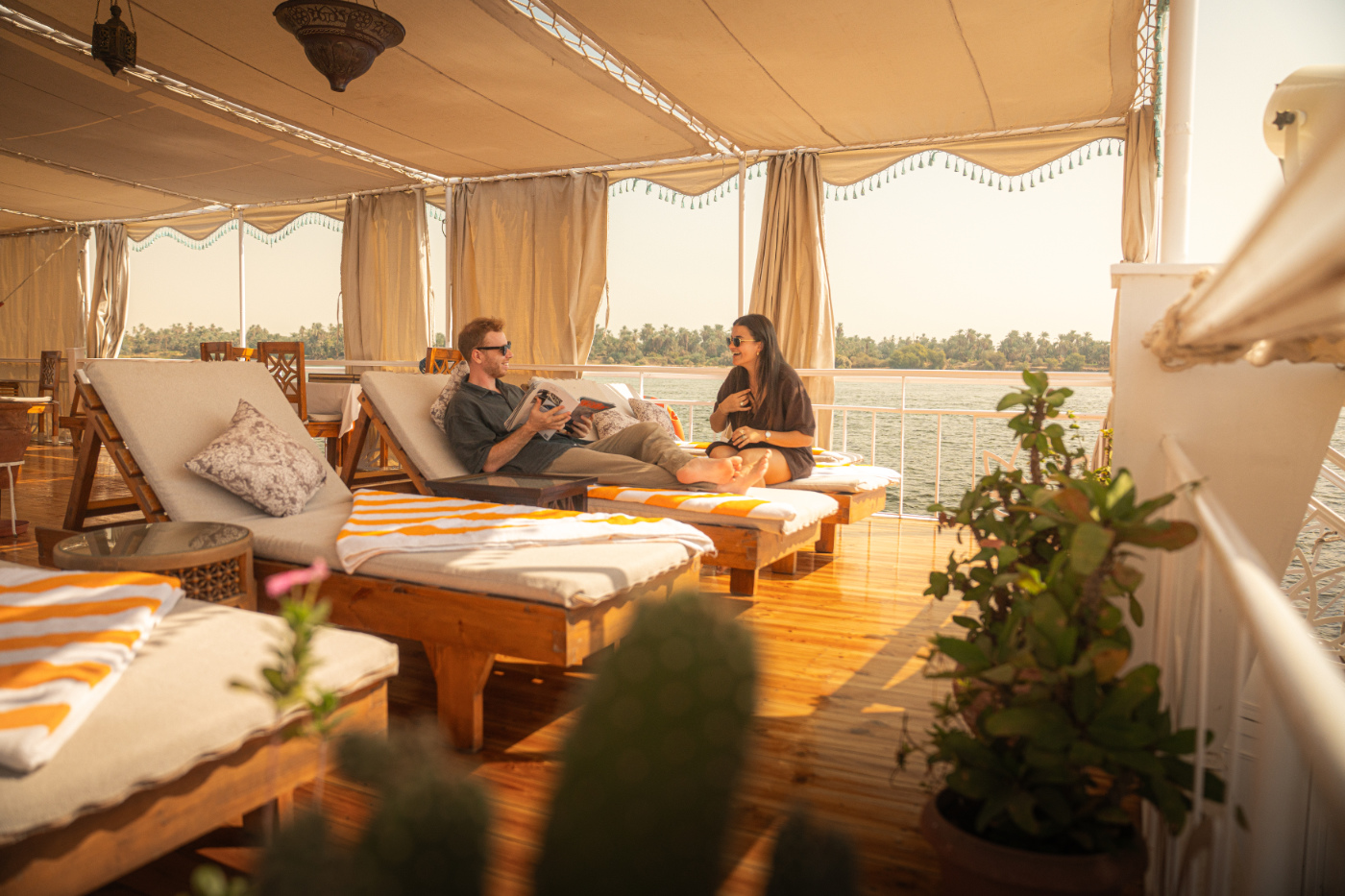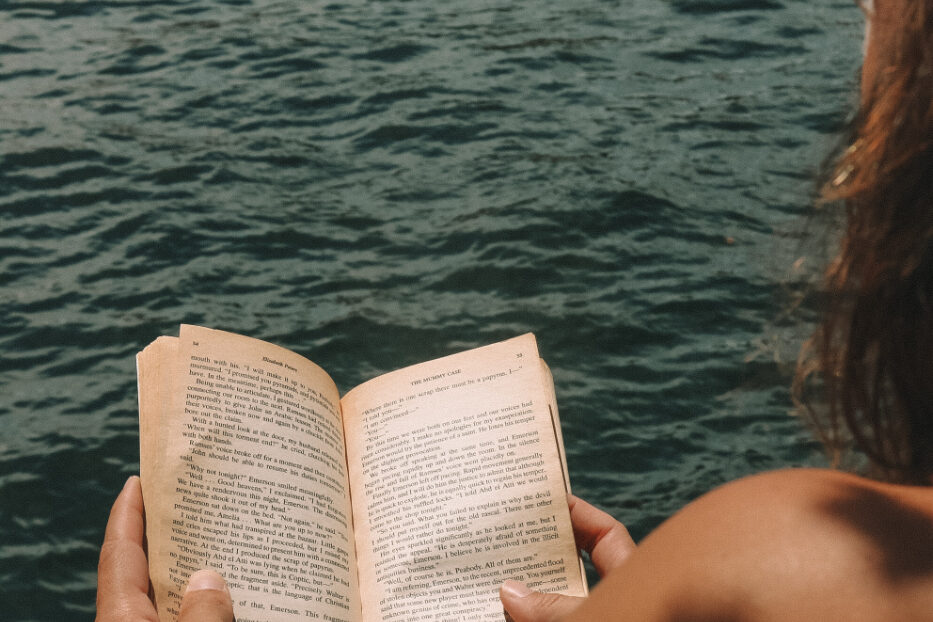
There is a particular kind of reading that happens on the water. The pace slows, the phone loses its grip on you, and long chapters become something to sink into rather than race through. A dahabiya journey down the Nile, something unhurried, intimate, and tied to the rhythm of the river rather than an airport transfer schedule, is one of the finest reading environments on earth. The question is what to bring.
Egypt has inspired a remarkable body of literature: ancient texts, Victorian adventures, modernist novels, and contemporary fiction that stretches from Alexandria’s Mediterranean sea to the sandstone temples of Upper Egypt. Here are the books that deserve a place in your bag before you step aboard.
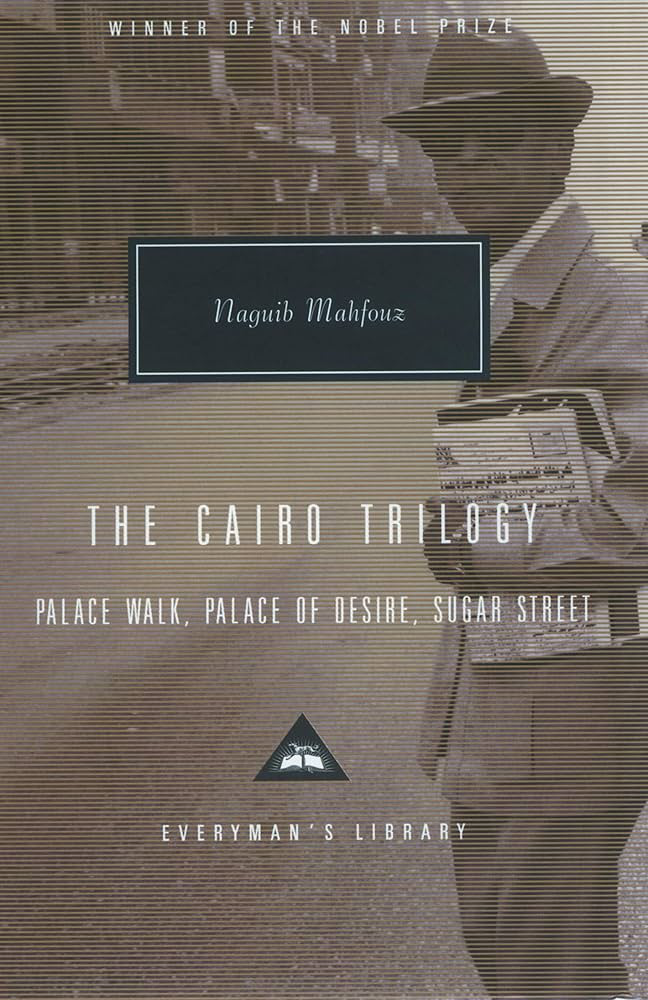
Naguib Mahfouz — The Cairo Trilogy
If you read only one Egyptian author, it must be Mahfouz, the Nobel laureate who mapped Cairo’s soul across three generations of a merchant family. Palace Walk, Palace of Desire, and Sugar Street are dense, humane, and completely absorbing, exactly the kind of novels that reward the long, uninterrupted stretches a dahabiya afternoon provides. Begin before you travel, and the city will greet you like a place you half-remember.
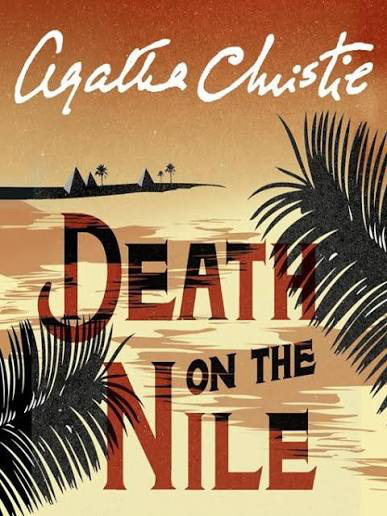
Agatha Christie — Death on the Nile
Arguably the most iconic Nile travel companion ever written. Christie conceived much of it while staying at the Old Cataract Hotel in Aswan, and her descriptions of the river, the temples, and the unhurried world of Egyptian travel in the 1930s are vivid enough to feel like a parallel journey. Reading it while gliding past the same felucca-dotted stretches she wrote about is a particular pleasure.
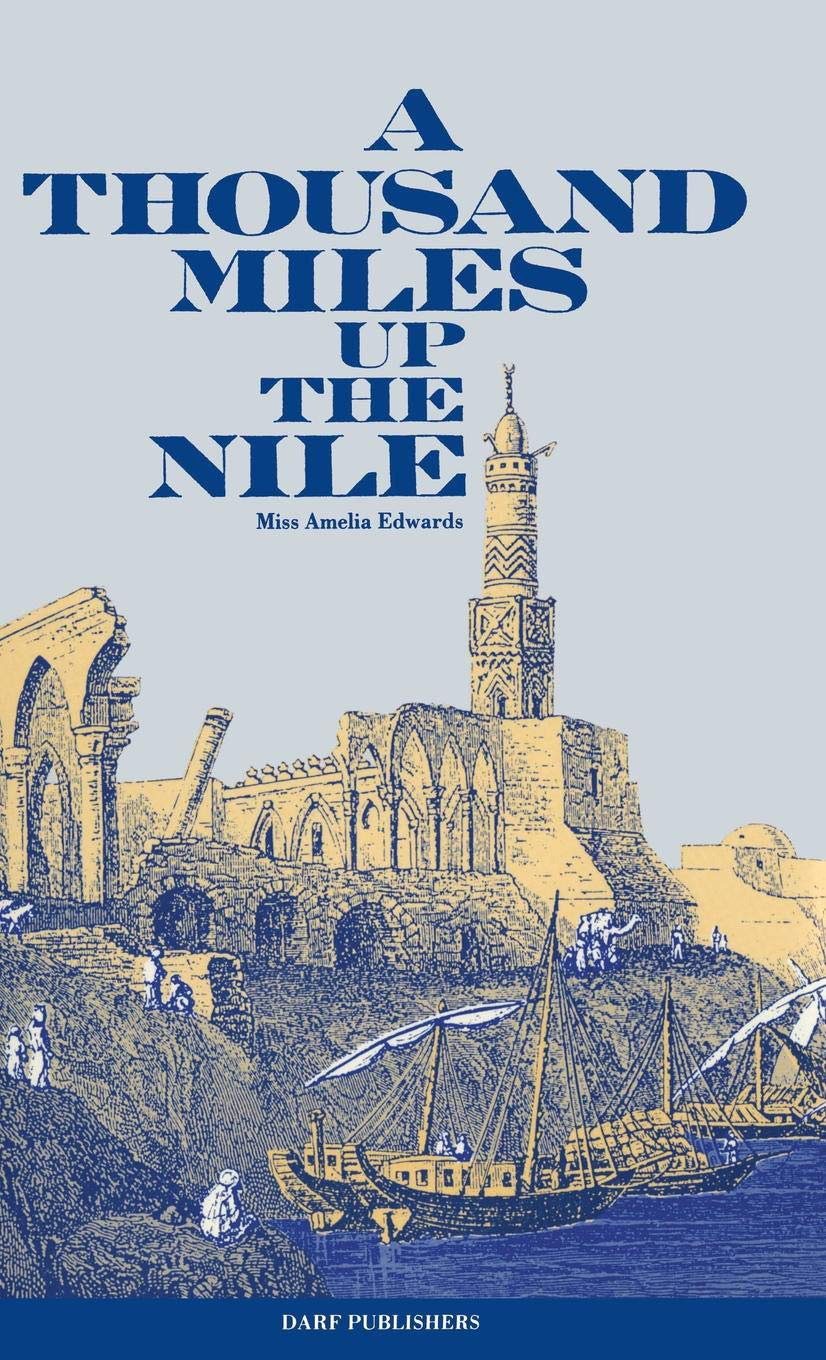
Amelia Edwards — A Thousand Miles Up the Nile
In 1873, Edwards — novelist, journalist, and pioneering Egyptologist — travelled from Cairo to Aswan by dahabiya, the very same style of vessel you’d be aboard on our sails. Sketchbook in hand, she documented every temple, tomb, and monument along the way with such precision that she effectively produced the first general archaeological survey of the Nile’s ruins, and went on to co-found what is now the Egypt Exploration Society. Reading her on the water is a conversation across 150 years: the sandstone cliffs, the light on the river, the slow arrival at Edfu or Kom Ombo, she saw all of it from a deck not so different from ours. The full text is available free on Project Gutenberg, so it’s worth downloading before you step on board.
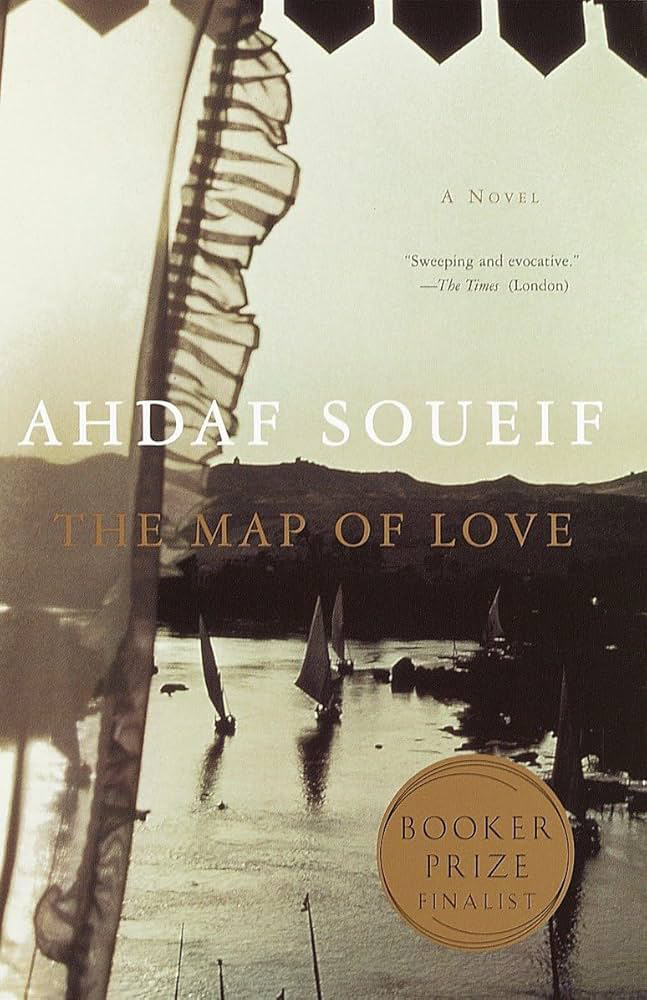
Ahdaf Soueif — The Map of Love
A sweeping, dual-timeline novel weaving between colonial Egypt and the present day, written by one of the country’s most important contemporary voices. It moves between Cairo and the desert, between Arabic and English, between political turmoil and intimate love, and it handles all of it with elegance. This is the kind of book you stay up too late reading.
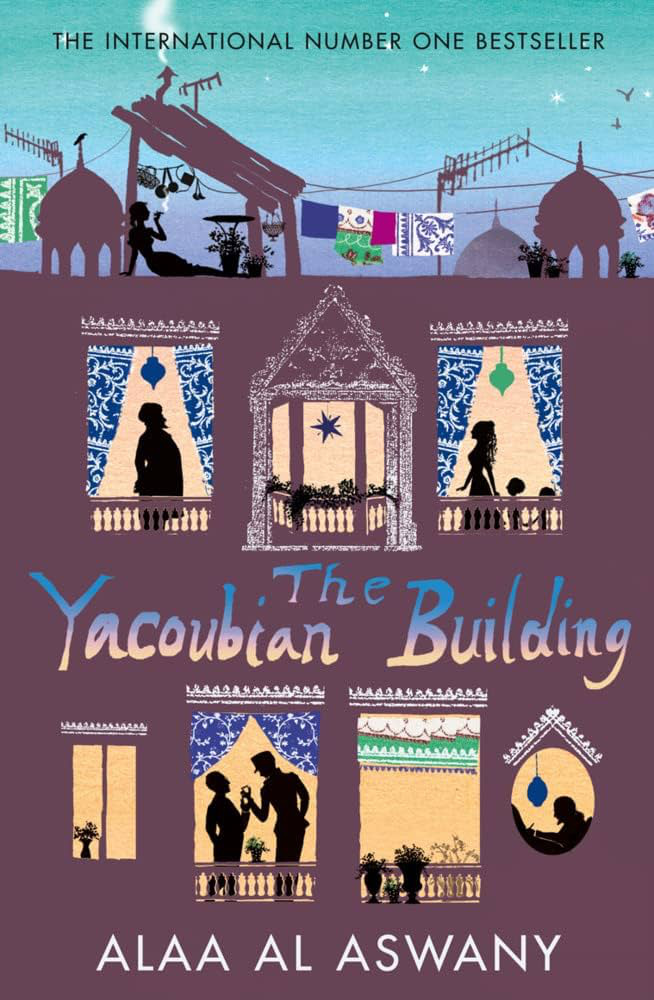
Alaa Al Aswany — The Yacoubian Building
Named after a real art deco apartment block in downtown Cairo, this novel uses a single building as a microcosm of Egyptian society, its tenants ranging from a secular aristocrat to a religious extremist to a young man caught between ambition and corruption. It’s forceful, funny, and quietly devastating, and it captures modern Cairo with the same granular affection Mahfouz brought to an earlier era. A natural companion to the Trilogy if you want to feel the city across time.
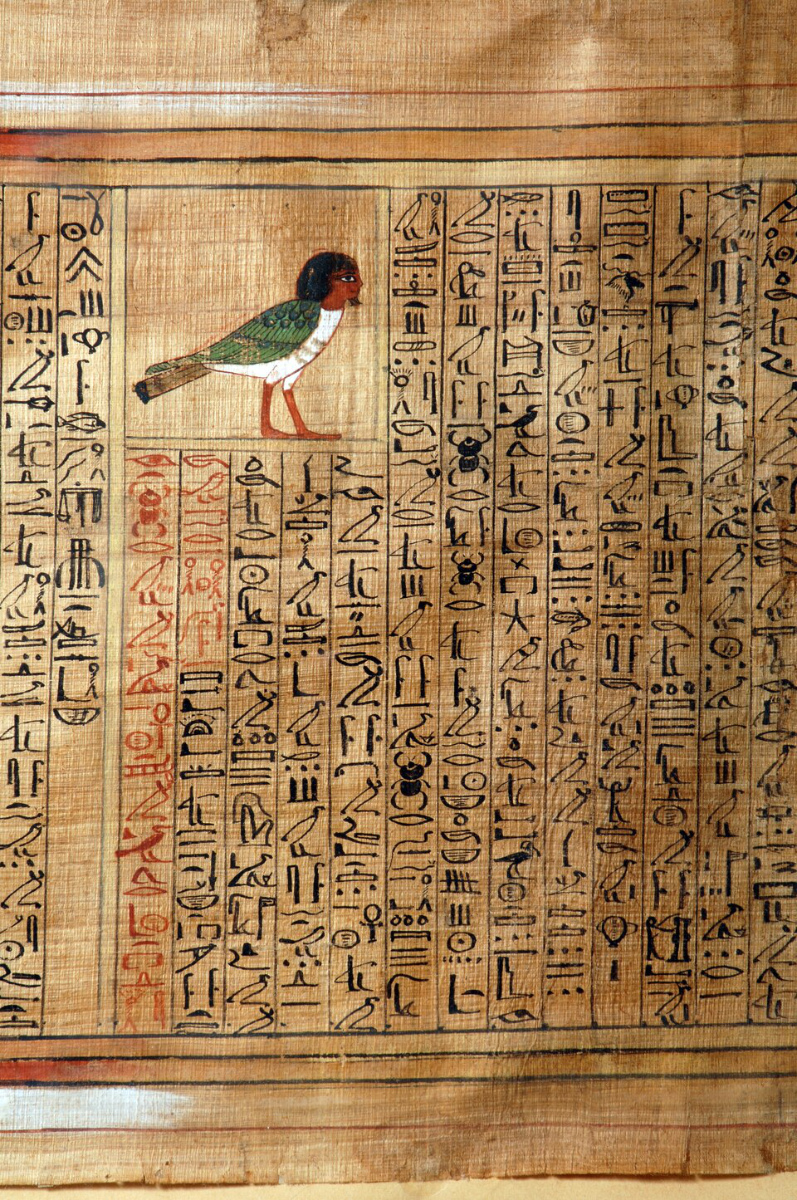
The Book of the Dead (any good translation)
A luxury of slow travel is the time to read things you’d normally not have time for. Ancient Egyptian funerary texts, particularly E.A. Wallis Budge’s translation or the more recent Faulkner edition, are unlike anything else. Floating past temples where these very words were carved into walls, you read them differently.
There’s a long tradition of bringing a notebook onto the Nile — Edwards herself never travelled without her sketchbook — and it points to a small but growing philosophy among travellers to disconnect from technology. A dahabiya is one of the last environments where this approach feels entirely natural. The pace of the boat, the absence of in-room televisions, the slow drift past a bank of papyrus reeds, all of it gently pushes you toward the physical and away from the digital. Two or three well-chosen books, a notebook for sketches or impressions, and a pen you actually like writing with: that’s the whole list. Everything else the river provides.
Pack heavy on the reading. You’ll be glad you did.