For many travelers, the great temples of Egypt bring to mind towering pylons, vast courtyards, and monumental statues rising dramatically from the riverbank. Esna Temple offers something different, and in many ways, more intimate. Located on the west bank of the Nile between Luxor and Edfu, this beautifully preserved sanctuary invites visitors to step beneath the surface of modern life and into a richly decorated world of Greco-Roman Egypt.
When traveling by dahabiya, Esna is not a rushed stop squeezed between highlights. It is a quiet pause in the journey, one that rewards those who take the time to look up, linger, and listen.
A Temple Beneath the Town
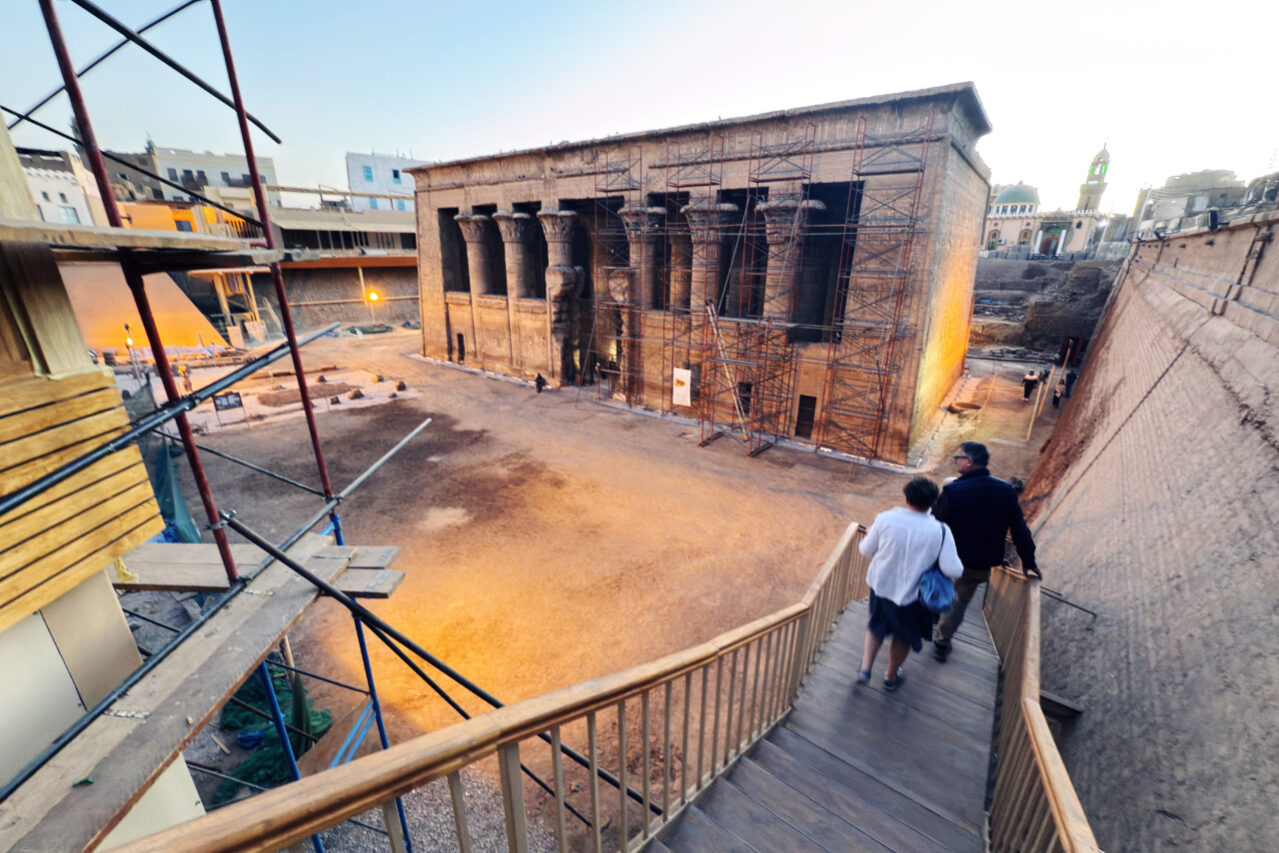
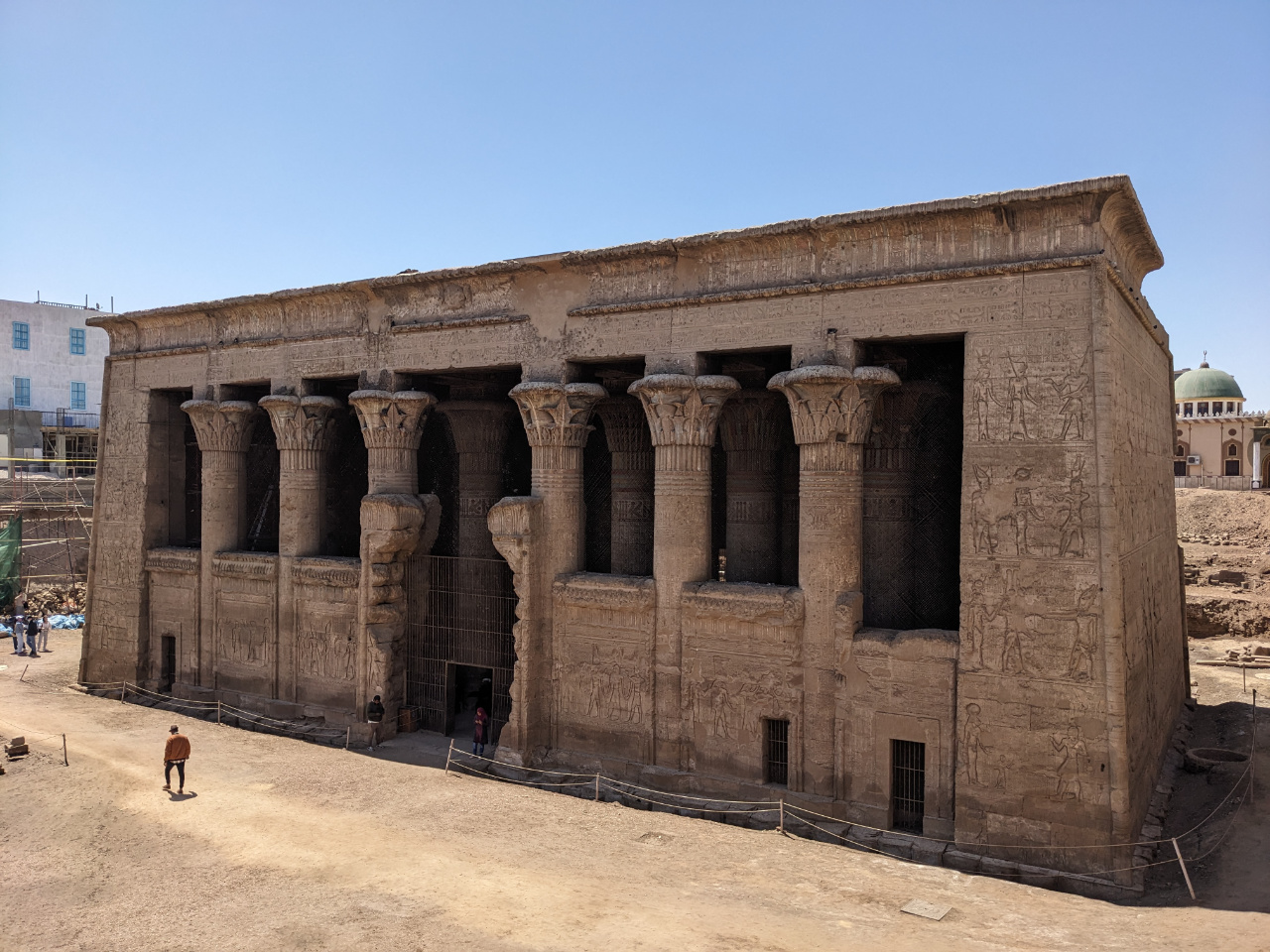
Unlike many ancient monuments, Esna Temple lies several meters below the modern city that surrounds it. For centuries, it was buried beneath layers of silt deposited by the Nile’s annual floods. What remains visible today is primarily the temple’s pronaos, or entrance hall, yet this single space is so densely carved and vividly detailed that it feels like an entire monument in itself.
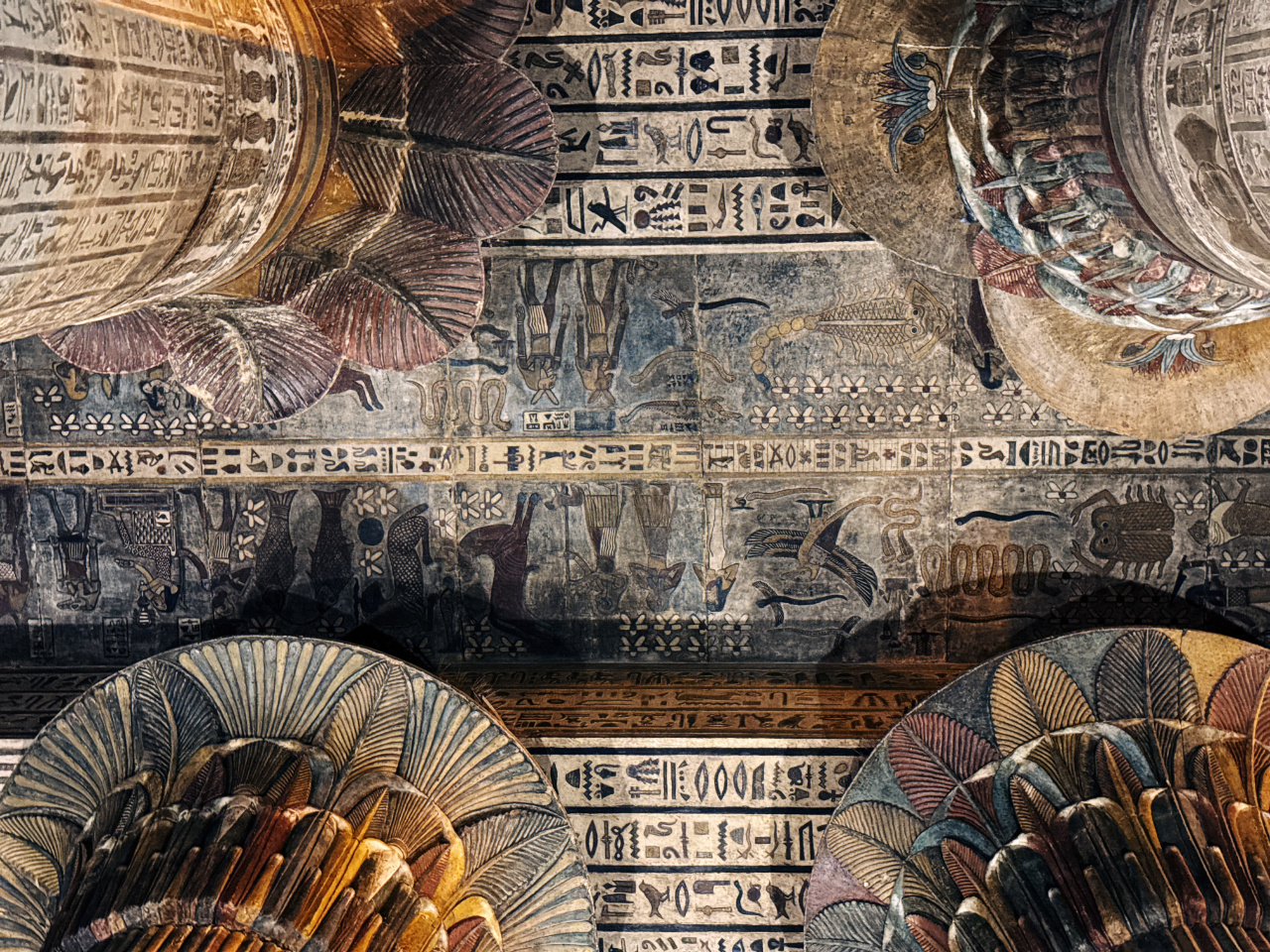
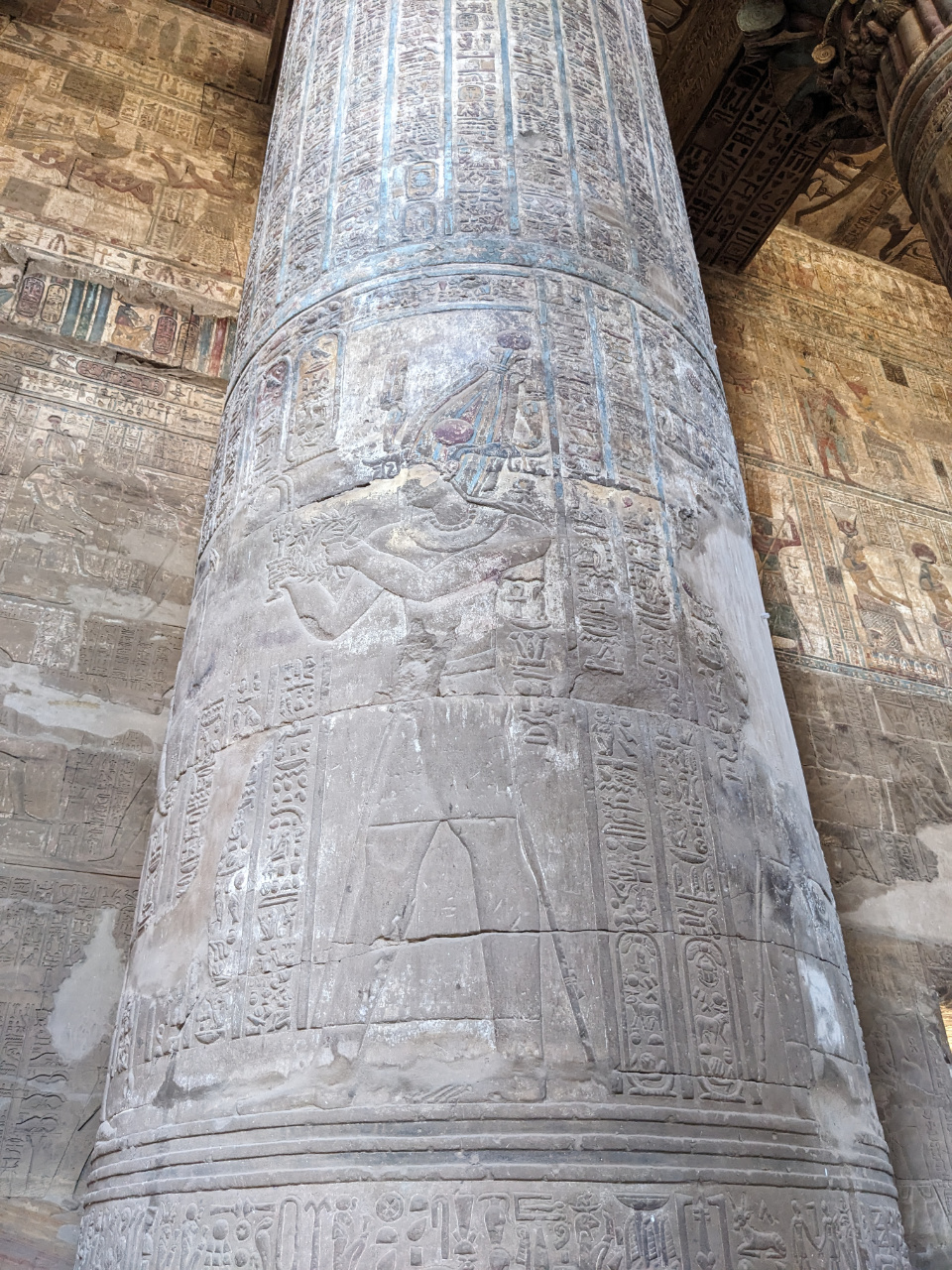
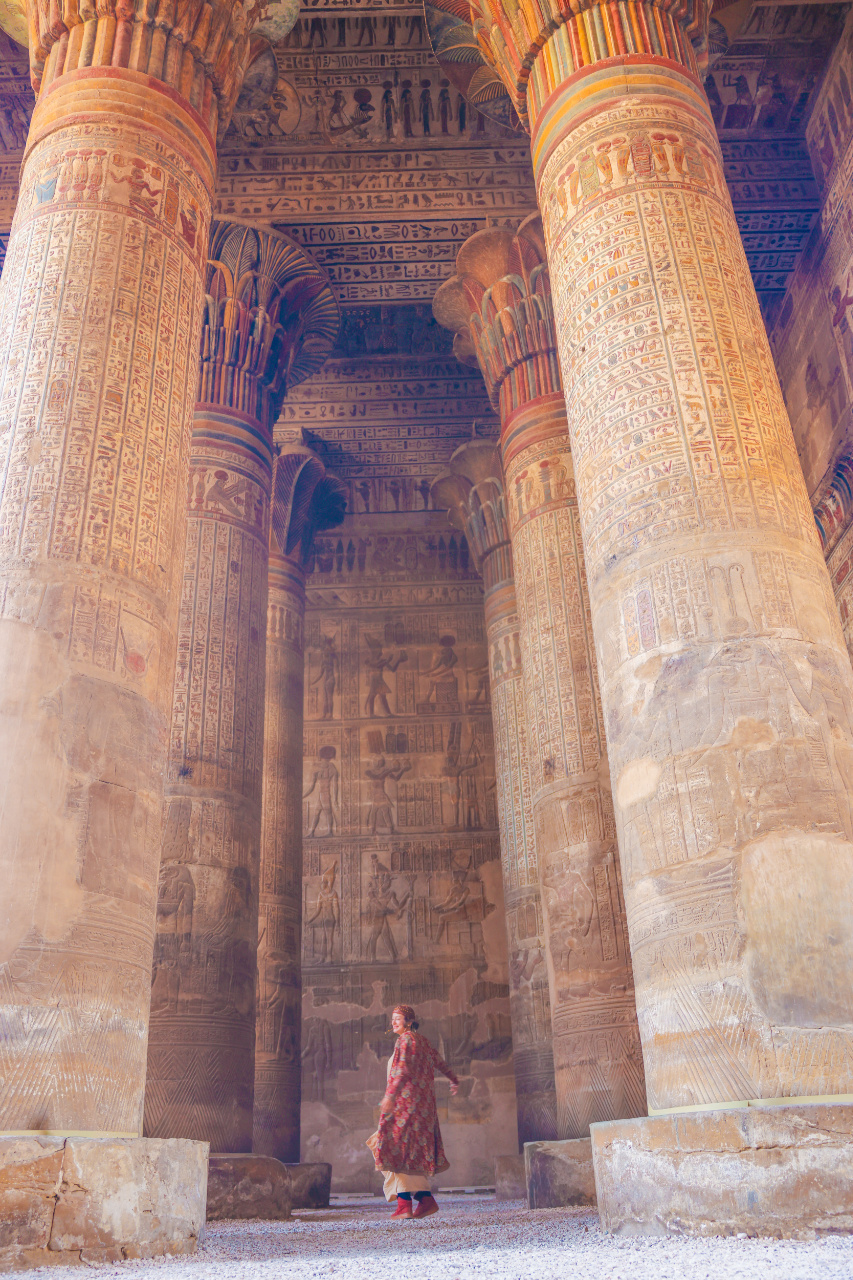
Descending into the temple is a striking experience. The noise of the street fades, replaced by cool air and filtered light. Massive columns rise overhead, their capitals shaped like lotus and papyrus plants, symbols of rebirth and creation. Above them, the ceiling is covered in astronomical reliefs: zodiac signs, constellations, and representations of the cosmos that reflect the ancient Egyptians’ fascination with the heavens.
Khnum, Creator God of the Nile
Esna Temple is dedicated primarily to Khnum, the ram-headed god associated with creation, fertility, and the Nile’s life-giving floods. According to mythology, Khnum fashioned humans on a potter’s wheel, shaping their bodies and destinies by hand. His presence here, in a town so closely tied to the river’s rhythms, feels entirely fitting.
The temple walls depict Khnum alongside other deities, including Neith and Heka, as well as Roman emperors portrayed as pharaohs. These reliefs offer a fascinating glimpse into a period when ancient Egyptian religious traditions continued under Greek and Roman rule, blending old beliefs with new political realities.
Color, Detail, and Preservation
One of Esna Temple’s most surprising features is its color. Recent conservation work has revealed remarkably well-preserved pigments on the ceiling and reliefs, allowing visitors to see the temple closer to how it might have appeared nearly 2,000 years ago. Deep blues, warm reds, and soft yellows bring depth and clarity to scenes that elsewhere are often worn smooth by time.
Because Esna is less visited than larger sites, the experience tends to be calmer and more personal. There is space to observe details, to ask questions, and to appreciate the artistry without crowds pressing in from all sides.

Esna on a Dahabiya Journey
Visiting Esna as part of a dahabiya Nile cruise adds an extra layer of meaning to the experience. Rather than arriving by bus on a tight schedule, guests step ashore from a small, traditional sailing boat. The pace is unhurried, the transition gentle.
Esna fits naturally into the rhythm of a dahabiya journey. After exploring the temple, travelers either end their journey with us (if travelling from Aswan to Luxor) or return on board for lunch, a breeze off the water, and the slow continuation of the sail (if traveling from Luxor to Aswan). It is this balance—between cultural discovery and quiet relaxation—that defines the dahabiya experience.
A Different Way to Experience Egypt
Esna Temple may not dominate postcards or guidebook covers, but it leaves a lasting impression on those who visit. It tells a story not just of gods and emperors, but of continuity, of how ancient traditions adapted and endured along the Nile.
For travelers seeking a deeper, more measured connection to Egypt’s past, moments like these matter. They are best enjoyed without rush, surrounded by the river that shaped them.
A dahabiya cruise allows you to encounter places like Esna as part of a flowing journey rather than a checklist of sights, traveling as the Nile was meant to be experienced, one quiet revelation at a time.